 EN
EN


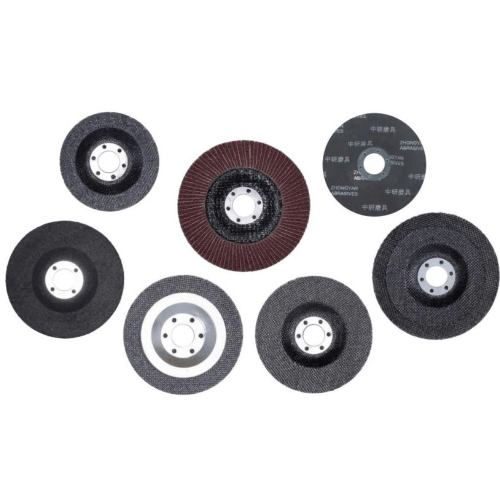
In high-volume B2B manufacturing environments, every decision about tooling has a direct and measurable impact on production ROI. One of the most consequential yet frequently underestimated choices is the design of the polishing head used in surface finishing operations. Whether your facility processes metal components, composite materials, or engineered surfaces, the geometry, flexibility, and material composition of your polishing head fundamentally determine how efficiently material is removed, how consistent the surface finish remains across production runs, and how long each tool lasts before requiring replacement. These factors compound over thousands of operational cycles, making the right polishing head selection a genuinely strategic business decision.
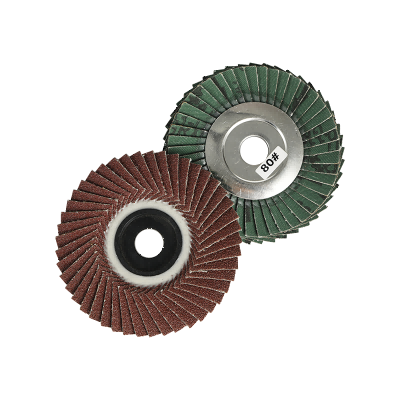
This article examines the core technical and commercial differences between elastic and rigid polishing head designs, helping procurement managers, process engineers, and production directors make informed, ROI-driven decisions. We will explore how each design type responds to contoured surfaces, flat workpieces, thermal stress, and abrasive wear, as well as the downstream cost implications of choosing one architecture over another. By the end, you will have a clear, evidence-based framework for evaluating which polishing head configuration best fits your specific production context, material types, and long-term throughput targets.
Understanding the Functional Role of a Polishing Head in Industrial Operations
What a Polishing Head Actually Does in a Production Context
A polishing head is the interface between your abrasive system and the workpiece surface. It transmits rotational or oscillatory energy from the spindle to the abrasive media, applying controlled pressure across a defined contact zone. The efficiency of this energy transfer determines your material removal rate, surface consistency, and heat generation profile. A well-designed polishing head distributes pressure evenly, minimizes vibration, and maintains consistent contact even as abrasive media wears down over the tool's operational life.
In B2B production environments, polishing heads are subjected to continuous mechanical and thermal stress. Unlike low-duty applications, industrial polishing heads must maintain repeatable performance across thousands of workpiece cycles without operator adjustment. This durability requirement is what separates professional-grade tooling from commodity abrasive products. Every design choice—from backing material hardness to flap angle and arbor attachment geometry—affects how the polishing head handles these stresses over time.
The polishing head also plays a critical role in managing heat at the workpiece surface. Excessive heat causes surface discoloration, metallurgical stress in precision components, and premature glaze-over of abrasive media. A polishing head that distributes contact area effectively reduces localized heat concentration, protecting both the workpiece and the tool itself. This is particularly important in aerospace, automotive, and medical device manufacturing, where surface integrity specifications are non-negotiable.
How Design Architecture Connects to Production Economics
The architecture of a polishing head is not merely a technical consideration—it is an economic one. Tool cost per unit of material removed, changeover frequency, downtime caused by tool failures, and rework rates caused by inconsistent surface quality are all directly influenced by the polishing head design you standardize across your production floor. When you multiply these micro-level differences by the scale of industrial production, the total cost impact becomes substantial.
Consider a facility running ten spindles for twelve hours per day on a steel fabrication line. If one polishing head design delivers fifteen percent more material removal per tool life cycle than an alternative, the compounded saving in tool procurement, labor, and machine downtime across a full production year is significant. This is why leading manufacturers increasingly approach polishing head selection as a capital allocation decision rather than a routine consumable purchase. The return on investment calculation starts with understanding the technical performance differential between available designs.
Elastic Polishing Head Designs: Technical Characteristics and Performance Benefits
How Elastic Designs Respond to Surface Geometry and Workpiece Variation
An elastic polishing head is built around a flexible backing system that allows the abrasive contact surface to conform to workpiece geometry under applied pressure. This conformability is its defining functional advantage. When a polishing head encounters a curved surface, weld seam, edge radius, or irregular profile, an elastic design adapts its contact geometry dynamically rather than bridging across the surface variation. The result is more consistent material removal across complex or variable geometries without requiring specialized toolpath programming or manual repositioning.
The elastic polishing head achieves this through a combination of backing material compliance and flap or media geometry. Flexible flap disc configurations, for example, allow individual abrasive flaps to deflect independently as they contact the workpiece. This independent deflection means that the polishing head maintains productive abrasive contact even across undulating surfaces, achieving full abrasive utilization rather than the selective wear patterns that rigid designs produce on non-flat workpieces. For manufacturers processing components with variable surface profiles, this characteristic alone can justify the investment in elastic tooling.
Elastic polishing head designs also tend to perform well in edge-finishing applications where workpiece edges require consistent radius formation without excessive undercutting. The controlled compliance of the backing allows the polishing head to flow around edges rather than snagging or skipping, reducing the risk of workpiece damage and the need for secondary deburring operations. In high-mix production environments where component geometry varies frequently, this versatility translates directly into reduced setup complexity and faster changeover between jobs.
Tool Longevity Factors in Elastic Polishing Head Systems
The longevity of an elastic polishing head is governed by how evenly the abrasive media wears across the tool's active surface. Because elastic designs distribute contact force across a broader area and conform to workpiece shape, abrasive wear tends to be more uniform than in rigid alternatives. Uniform wear means that the polishing head retains cutting efficiency longer into its operational life, reducing the frequency of replacement and the associated procurement and changeover costs.
However, elastic polishing head designs do have longevity limitations in very high-pressure or high-speed applications. Excessive pressure can cause premature tearing of the backing material or accelerated delamination of abrasive flaps. For this reason, elastic designs are best suited to applications where process parameters—particularly feed pressure and spindle speed—are controlled within the tool manufacturer's recommended range. Proper parameter management is essential to achieving the full designed service life of any elastic polishing head.
Thermal management also plays a role in elastic polishing head longevity. Flexible backing materials are typically more sensitive to sustained heat than rigid alternatives. In applications where continuous cutting cycles generate significant heat at the tool-workpiece interface, elastic designs may require periodic coolant application or duty cycle management to prevent premature degradation. Process engineers should account for this characteristic when designing production cycles around elastic polishing head tooling.
Rigid Polishing Head Designs: Where Structure Delivers Superior Results
The Case for Rigid Architecture in Flat-Surface and High-Pressure Applications
A rigid polishing head is designed to maintain a fixed contact geometry under applied pressure. Unlike elastic alternatives, the rigid backing does not conform to the workpiece surface. Instead, it presents a consistent, stable abrasive face that delivers predictable material removal on flat or gently contoured surfaces. This structural consistency is the primary advantage of rigid polishing head designs in appropriate applications. When your production involves flat panels, planar welds, or machined surfaces requiring precise stock removal, a rigid polishing head typically outperforms elastic alternatives in terms of material removal rate per unit time.
Rigid polishing head designs also excel in applications where high clamping or feed pressure is required to achieve target material removal rates on hard or tough materials. The non-compliant backing structure allows pressure to be applied aggressively without risking backing deformation or abrasive media detachment. In heavy grinding and weld dressing operations on structural steel, stainless steel fabrications, or hardened alloy components, a rigid polishing head can sustain the mechanical loading required for efficient stock removal while maintaining dimensional control of the workpiece surface.
For automated CNC grinding and finishing systems, rigid polishing head configurations offer a further advantage: predictable tool behavior. Because the rigid design does not change its contact geometry under pressure, CNC programs can be written with high confidence that the tool will perform as modeled. This predictability reduces the need for in-process measurement and operator intervention, supporting unattended or lights-out production strategies that are increasingly important in competitive B2B manufacturing environments.
Wear Patterns and Longevity Considerations for Rigid Designs
The wear behavior of a rigid polishing head differs meaningfully from that of elastic designs, particularly in applications involving non-flat workpiece surfaces. Because the rigid backing does not conform, contact is concentrated on the highest points of the workpiece surface, creating differential wear across the polishing head face. On flat surfaces, this produces acceptably uniform wear. On curved or irregular surfaces, however, the resulting uneven wear pattern shortens tool life and creates inconsistent surface finishes as the tool degrades.
In appropriate flat-surface applications, rigid polishing head designs frequently deliver excellent longevity because abrasive media engagement is maximized within the tool's designed contact geometry. The full face of the polishing head remains engaged with the workpiece throughout the tool's service life, ensuring that abrasive capacity is fully utilized rather than partially wasted through uneven wear. Process planners should design workholding fixtures and part presentation strategies that support consistent flat contact with rigid polishing head tooling to maximize this longevity advantage.
Thermal durability is generally stronger in rigid polishing head designs because the solid backing materials used—typically phenolic resin, fiberglass, or metal—resist heat-induced deformation more effectively than flexible polymer or fiber-backed designs. In high-speed, dry grinding applications where heat generation is unavoidable, rigid designs often provide better sustained performance and more consistent surface quality throughout the tool's life cycle. This thermal resilience is a practical advantage in applications where wet grinding or coolant use is not feasible.
Selecting the Right Polishing Head for Your Specific Production Requirements
Matching Design Type to Workpiece Geometry and Material Class
The most important criterion in polishing head selection is the geometry of the workpieces your production line processes. If your facility handles components with complex profiles, curved surfaces, variable cross-sections, or significant edge-finishing requirements, an elastic polishing head design will consistently outperform rigid alternatives in both surface quality and material removal efficiency across the full surface area. The conformability advantage of elastic designs translates directly into fewer secondary operations, lower rework rates, and better part-to-part consistency in these applications.
For facilities focused primarily on flat-surface work—plate fabrication, panel processing, planar weld dressing, or flat component grinding—a rigid polishing head is often the more cost-effective choice. The higher material removal rate per unit time, greater pressure tolerance, and superior thermal durability of rigid designs deliver better economics on flat-surface applications at industrial scale. The key is honest assessment of your workpiece portfolio: if more than thirty percent of your components involve significant geometric complexity, the case for elastic tooling strengthens considerably.
Material class also matters. Elastic polishing head designs generally perform better on softer metals, aluminum alloys, and non-metallic surfaces where aggressive cutting pressure is not required and conformability adds more value than raw cutting power. Rigid designs are better suited to hard steels, stainless grades, and materials requiring high stock removal rates. Mixed production environments processing both hard and soft materials across varying geometries often benefit most from a hybrid approach, maintaining both elastic and rigid polishing head tooling for different process stations.
Evaluating Total Cost of Ownership Rather Than Unit Price
A common mistake in polishing head procurement is evaluating tooling on unit price rather than total cost of ownership. A lower-priced polishing head that requires more frequent replacement, generates higher rework rates, or demands more operator attention can easily exceed the lifetime cost of a premium tool that delivers consistent performance over a longer service interval. B2B procurement decisions about polishing head tooling should always include a structured total cost of ownership analysis that accounts for tool consumption rate, labor associated with changeover, machine downtime, and quality cost implications.
For facilities running high-volume continuous production, even a modest improvement in polishing head service life has significant annualized value. A polishing head that delivers twenty percent longer service life at ten percent higher unit cost represents a clear net saving in most industrial production contexts. Building this calculation into your tooling evaluation process moves polishing head selection from a tactical purchasing decision into a strategic operations management practice that directly supports production ROI targets.
Standardization across production lines also affects total cost of ownership. When a facility standardizes on a specific polishing head platform—whether elastic or rigid—across multiple machines and stations, it reduces the complexity of inventory management, operator training, and process documentation. This standardization benefit is often undervalued in initial tooling assessments but becomes highly visible in operational efficiency reviews. Procurement teams should factor standardization potential into polishing head selection decisions alongside purely technical performance criteria.
Implementation Strategy: Transitioning to Optimized Polishing Head Tooling
Conducting Effective Production Trials Before Full Commitment
Before committing to a new polishing head design across a full production line, structured production trials are essential. A meaningful trial should replicate your actual production conditions—including representative workpiece materials, surface geometries, machine parameters, and throughput rates—rather than controlled laboratory conditions that may not reflect real-world performance. The trial should measure material removal rate, surface finish quality against specification, tool life cycle length, and any quality deviations across the trial run. These metrics provide the factual basis for a credible ROI projection before capital commitment.
Trial design should also account for operator familiarity effects. Operators experienced with one polishing head design may not immediately achieve optimal results with a new configuration. Allowing adequate time for operator adaptation—typically two to four weeks of consistent use—ensures that trial results reflect the tool's true steady-state performance rather than a learning curve artifact. Including operator feedback in the trial evaluation process also surfaces practical handling considerations that may not appear in technical specifications but matter significantly in production reality.
Integrating Polishing Head Selection into Broader Process Optimization
Optimizing your polishing head selection should not be treated as an isolated tooling decision. It is most effective when integrated into a broader process optimization review that examines spindle speed, feed rate, workholding design, coolant strategy, and quality inspection frequency as a system. The best polishing head design for your production context is the one that performs optimally within your specific combination of machine capabilities, operator practices, workpiece characteristics, and quality targets—not just the one with the best technical specifications in isolation.
Process engineers who approach polishing head optimization as part of a holistic finishing process review consistently achieve better ROI outcomes than those who address tooling selection in isolation. Changes to spindle speed or feed rate, for example, can dramatically alter the performance differential between elastic and rigid polishing head designs, potentially shifting which option delivers superior economics in your application. Treating the polishing head as one variable within a process system—rather than as a standalone product purchase—unlocks the full optimization potential available to production facilities committed to continuous improvement.
FAQ
What is the primary difference between an elastic and a rigid polishing head in industrial use?
The primary difference lies in how each polishing head responds to surface geometry under applied pressure. An elastic polishing head conforms to curved or irregular surfaces, maintaining consistent abrasive contact across complex profiles. A rigid polishing head maintains a fixed contact geometry, delivering predictable and high-rate material removal on flat surfaces. Choosing between them depends on your workpiece geometry, material type, and production volume requirements.
How does polishing head selection affect production ROI beyond direct tool cost?
Polishing head selection affects ROI through multiple cost channels beyond unit price: tool consumption rate, machine downtime during changeover, rework costs from inconsistent surface quality, and labor associated with tool management. A polishing head that delivers longer service life, more consistent surface quality, and fewer quality escapes contributes to ROI improvement across all these dimensions simultaneously. Total cost of ownership analysis is the correct framework for evaluating polishing head investment decisions.
Can one polishing head design serve all applications in a mixed production environment?
In most mixed production environments, a single polishing head design cannot optimally serve all applications. Facilities processing both flat and complex-geometry workpieces typically achieve better overall performance and economics by maintaining both elastic and rigid polishing head tooling configured for specific process stations. A standardized hybrid approach—with clearly defined application criteria for each design type—delivers better ROI than forcing a single polishing head design into all production contexts.
What process parameters should be optimized when introducing a new polishing head design?
When introducing a new polishing head design, the critical process parameters to review and potentially adjust include spindle speed, feed pressure, workpiece presentation angle, coolant application strategy, and duty cycle management. Each polishing head design has an optimal operating envelope defined by these parameters. Running a new polishing head outside its designed parameter range—even temporarily—can significantly shorten service life and produce misleading performance data during evaluation trials.
Table of Contents
- Understanding the Functional Role of a Polishing Head in Industrial Operations
- Elastic Polishing Head Designs: Technical Characteristics and Performance Benefits
- Rigid Polishing Head Designs: Where Structure Delivers Superior Results
- Selecting the Right Polishing Head for Your Specific Production Requirements
- Implementation Strategy: Transitioning to Optimized Polishing Head Tooling
-
FAQ
- What is the primary difference between an elastic and a rigid polishing head in industrial use?
- How does polishing head selection affect production ROI beyond direct tool cost?
- Can one polishing head design serve all applications in a mixed production environment?
- What process parameters should be optimized when introducing a new polishing head design?