 EN
EN


When it comes to metal fabrication, woodworking, and surface preparation tasks, choosing the right abrasive tool can make the difference between professional results and subpar outcomes. Two of the most commonly used abrasive tools in industrial and workshop environments are flap wheels and grinding wheels, each offering distinct advantages for specific applications. Understanding the fundamental differences between these tools, their optimal use cases, and performance characteristics is essential for professionals seeking to maximize efficiency while maintaining quality standards. The flap wheel has gained significant popularity in recent years due to its versatility and ability to provide consistent finishes across various materials, making it a preferred choice for many surface preparation tasks.
Understanding Flap Wheel Construction and Design
Core Components and Materials
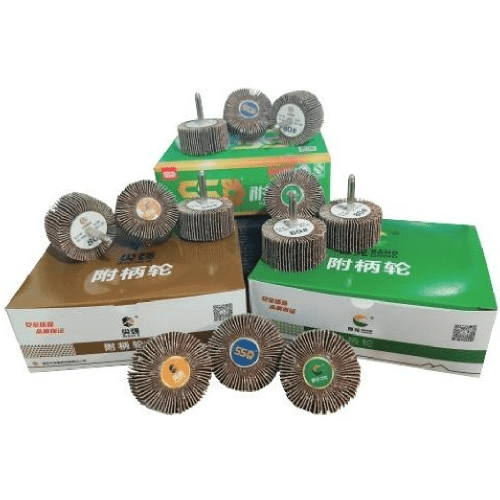
The construction of a flap wheel involves multiple abrasive cloth flaps arranged radially around a central hub, creating a three-dimensional cutting surface that provides consistent contact with the workpiece. These flaps are typically made from aluminum oxide, zirconia alumina, or ceramic materials, depending on the intended application and material being processed. The backing material, usually cloth or fiber, provides flexibility and durability while allowing the abrasive grains to maintain proper cutting action throughout the tool's lifespan. This unique construction allows the flap wheel to conform to irregular surfaces and contours, making it exceptionally versatile for complex geometries.
The density and arrangement of flaps within a flap wheel significantly impact its performance characteristics, with higher flap density providing smoother finishes and lower density configurations offering more aggressive material removal. Manufacturers carefully engineer the flap overlap and positioning to ensure consistent surface contact and prevent chattering or vibration during operation. The central hub design varies between different flap wheel types, with some featuring integrated shafts for direct mounting and others requiring separate arbors or mandrels for attachment to power tools.
Flexibility and Conformability Features
One of the most significant advantages of flap wheel technology lies in its inherent flexibility, which allows the tool to adapt to curved surfaces, corners, and complex workpiece geometries without losing effectiveness. This conformability results from the individual flap movement, which enables each abrasive segment to maintain contact with the surface regardless of minor variations in contour or positioning. The flexible nature of the cloth backing material further enhances this capability, allowing operators to achieve consistent finishes on both flat and contoured surfaces using the same tool.
The conformability of flap wheels also contributes to reduced operator fatigue, as the tool requires less precise positioning and pressure control compared to rigid abrasive wheels. This characteristic makes flap wheels particularly valuable in applications requiring extended periods of surface preparation or finishing work, where consistent results and operator comfort are paramount considerations.
Grinding Wheel Fundamentals and Applications
Traditional Grinding Wheel Construction
Grinding wheels represent the traditional approach to abrasive machining, featuring a solid construction where abrasive grains are bonded together using various bonding agents such as vitrified ceramic, resin, or rubber compounds. The wheel structure creates a rigid cutting surface that maintains its shape and dimensional accuracy throughout its operational life, making it ideal for precision grinding operations where tight tolerances are required. The abrasive grains in grinding wheels are typically aluminum oxide, silicon carbide, or advanced ceramic materials, selected based on the hardness and characteristics of the target material.
The bonding system in grinding wheels determines the wheel's hardness, porosity, and overall cutting characteristics, with manufacturers offering various grade combinations to match specific application requirements. Harder bonds retain abrasive grains longer, providing extended wheel life but potentially generating more heat during operation, while softer bonds release dulled grains more readily, maintaining sharp cutting action but requiring more frequent wheel replacement.
Precision and Power Applications
Grinding wheels excel in applications requiring high material removal rates, precise dimensional control, and consistent surface geometry across multiple workpieces. The rigid construction and concentrated abrasive action make grinding wheels particularly effective for heavy-duty operations such as weld removal, steel preparation, and roughing operations where aggressive cutting action is prioritized over surface finish quality. These tools maintain their cutting effectiveness even under high-pressure applications and can handle continuous operation without significant performance degradation.
The precision capabilities of grinding wheels make them indispensable for manufacturing processes where dimensional accuracy and repeatability are critical success factors. Their ability to maintain consistent cutting geometry throughout their operational life ensures that multiple workpieces receive identical treatment, supporting quality control requirements in production environments.
Performance Comparison and Selection Criteria
Surface Finish Quality and Consistency
When comparing surface finish quality, flap wheels generally produce superior results for applications where smooth, consistent finishes are desired. The multiple contact points created by individual flaps help eliminate chatter marks and provide gradual material removal that results in uniform surface texture. The self-sharpening characteristic of flap wheels, where dulled abrasive particles naturally break away to expose fresh cutting surfaces, maintains consistent cutting performance throughout the tool's life cycle.
Grinding wheels, while capable of producing excellent surface finishes when properly selected and operated, typically require more skill and experience to achieve optimal results. The rigid nature of grinding wheels can sometimes create inconsistencies in surface texture, particularly when working on irregular surfaces or when operator technique varies. However, for applications requiring specific surface roughness parameters or when working with particularly hard materials, grinding wheels may provide more predictable and repeatable results.
Material Removal Rates and Efficiency
Material removal efficiency varies significantly between flap wheels and grinding wheels depending on the specific application and operating conditions. Grinding wheels typically offer higher instantaneous material removal rates due to their concentrated abrasive action and rigid construction, making them more suitable for heavy stock removal operations. The aggressive cutting action of grinding wheels can significantly reduce processing time when removing large amounts of material or when working with particularly tough materials.
Flap wheels provide more controlled material removal, which can actually result in greater overall efficiency when considering the complete finishing process. The ability of a flap wheel to perform both rough material removal and fine finishing operations in a single setup often eliminates the need for multiple tool changes, reducing overall processing time and improving workflow efficiency. This characteristic makes flap wheels particularly valuable in applications where both material removal and surface finishing are required.
Cost Analysis and Tool Life Considerations
Initial Investment and Operating Costs
The initial cost differential between flap wheels and grinding wheels varies depending on quality, size, and manufacturer, but flap wheels typically command a premium price due to their complex construction and manufacturing processes. However, this higher initial investment often proves economical when considering the tool's versatility and ability to replace multiple specialized abrasives in many applications. The longer operational life of flap wheels, combined with their consistent performance throughout their lifespan, can result in lower per-part processing costs in suitable applications.
Grinding wheels generally offer lower initial purchase costs but may require more frequent replacement depending on application severity and operating conditions. The rigid construction of grinding wheels makes them more susceptible to damage from improper use or excessive pressure, potentially resulting in premature failure and increased replacement costs. Additionally, the need for multiple wheel types to achieve different surface finishes can increase overall tooling inventory costs.
Durability and Replacement Frequency
Tool life characteristics differ substantially between flap wheels and grinding wheels, with each offering advantages in specific operating conditions. Flap wheels typically provide longer operational life in applications involving moderate material removal and finishing operations, as their flexible construction and self-sharpening properties maintain cutting effectiveness even as individual flaps wear. The gradual wear pattern of flap wheels allows operators to predict replacement timing more accurately, supporting better maintenance planning and cost control.
Grinding wheels may offer extended life in heavy-duty applications where their rigid construction provides advantages, but their performance can deteriorate rapidly if operated outside recommended parameters. The concentrated wear pattern of grinding wheels can result in sudden performance changes, making replacement timing less predictable and potentially affecting production schedules if not properly monitored.
Application-Specific Selection Guidelines
Metalworking and Fabrication Applications
In metalworking environments, the choice between flap wheels and grinding wheels often depends on the specific operations required and the desired final surface quality. Flap wheels excel in applications such as weld blending, paint removal, rust elimination, and general surface preparation where smooth transitions and consistent finishes are priorities. The conformable nature of flap wheels makes them particularly valuable for working on curved surfaces, pipe work, and complex geometries common in fabrication environments.
Grinding wheels remain the preferred choice for heavy material removal operations, such as cutting through thick welds, removing substantial surface irregularities, or preparing surfaces for welding where dimensional accuracy is critical. The aggressive cutting action and rigid construction of grinding wheels provide the power and precision needed for these demanding applications, even though they may require additional finishing steps to achieve desired surface quality.
Woodworking and Non-Metal Applications
When working with wood, composites, or other non-metallic materials, flap wheels often provide superior results due to their gentler cutting action and reduced tendency to burn or damage heat-sensitive materials. The flexible flaps distribute cutting forces more evenly, reducing the risk of gouging or creating unwanted surface marks that are particularly problematic in visible finish applications. The variety of grit sizes available in flap wheel configurations allows operators to progress through multiple finishing stages using the same tool type.
Grinding wheels may still be appropriate for certain woodworking applications, particularly when working with very hard woods or when rapid material removal is required. However, the aggressive nature of grinding wheels requires careful technique and experience to avoid damage to the workpiece, making flap wheels the safer choice for many woodworking professionals.
Safety Considerations and Best Practices
Operational Safety Requirements
Both flap wheels and grinding wheels require adherence to strict safety protocols, but their different operational characteristics present unique safety considerations. Flap wheels typically operate at lower surface speeds and generate less aggressive cutting forces, potentially reducing the risk of kickback or loss of control during operation. However, the flexible nature of flap wheels can create entanglement hazards if proper guards and safety equipment are not used, particularly when working near loose clothing or in confined spaces.
Grinding wheels operate at high surface speeds and can generate significant cutting forces, requiring robust machine mounting and proper operator positioning to maintain control. The rigid construction of grinding wheels can create more severe kickback situations if the wheel binds or encounters unexpected resistance, making proper technique and safety equipment even more critical for safe operation.
Personal Protective Equipment and Environment
Regardless of the abrasive tool selected, comprehensive personal protective equipment including safety glasses, hearing protection, and respiratory protection is essential for safe operation. Flap wheels may generate less aggressive sparking and debris compared to grinding wheels, but adequate ventilation and dust collection remain important for maintaining healthy working conditions. The smoother operation of flap wheels can sometimes create a false sense of security, making consistent safety practices even more important.
Grinding wheel operations typically generate more intense sparking, higher noise levels, and greater quantities of airborne particles, requiring enhanced protective measures and environmental controls. Proper work area setup, including fire prevention measures and adequate ventilation systems, becomes critical when using grinding wheels regularly in production environments.
FAQ
What is the main difference between a flap wheel and a grinding wheel?
The main difference lies in construction and cutting action. A flap wheel consists of multiple abrasive cloth flaps arranged around a central hub, providing flexible, conformable cutting action that adapts to surface contours. Grinding wheels feature a solid, rigid construction with abrasive grains bonded together, offering aggressive material removal and precise dimensional control. Flap wheels excel in finishing applications and provide smoother surface quality, while grinding wheels are better suited for heavy material removal and precision operations.
Which tool provides better surface finish quality?
Flap wheels generally provide superior surface finish quality due to their multiple contact points and flexible cutting action that eliminates chatter marks and provides gradual material removal. The self-sharpening characteristic of flap wheels maintains consistent cutting performance throughout their life, resulting in uniform surface texture. While grinding wheels can produce excellent finishes when properly operated, they typically require more skill and may create surface inconsistencies, particularly on irregular surfaces or with varying operator technique.
Are flap wheels more cost-effective than grinding wheels?
Cost-effectiveness depends on the specific application and usage patterns. Flap wheels typically have higher initial costs but often provide better value through longer tool life, versatility in handling multiple operations, and reduced need for additional finishing steps. They can replace multiple specialized abrasives in many applications, reducing overall tooling costs. Grinding wheels offer lower initial purchase costs but may require more frequent replacement and additional tools for complete finishing processes, potentially increasing total operational costs.
When should I choose a grinding wheel over a flap wheel?
Choose grinding wheels for heavy material removal operations, precision grinding where dimensional accuracy is critical, cutting through thick welds, or when working with particularly hard materials that require aggressive cutting action. Grinding wheels are also preferable for production environments where high material removal rates are prioritized over surface finish quality, or when working on flat surfaces where the rigid construction provides advantages. Additionally, grinding wheels may be necessary for applications requiring specific surface roughness parameters or when working within tight tolerance requirements.