 EN
EN


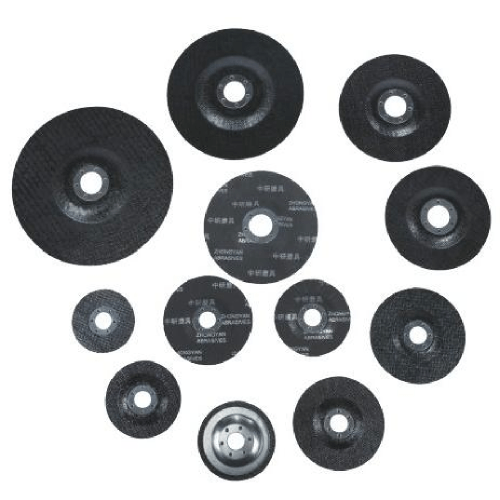
Achieving a flawless surface finish on stainless steel demands far more than simply running an abrasive tool across a workpiece. Every parameter — from the abrasive grit you select to the rotation speed you dial in — directly influences the final result. At the center of this entire process is the polishing head, a precision component that determines how efficiently abrasive material contacts the substrate, how heat is managed across the surface, and how consistently the finish replicates across a production run. Understanding how to get the most from this tool is not optional for serious fabricators; it is a technical discipline that separates average output from premium-grade results.
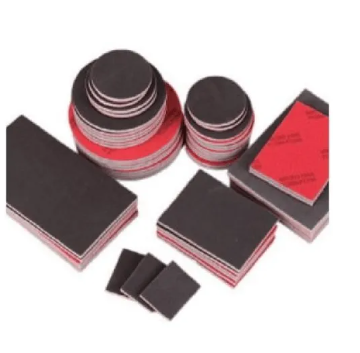
This technical guide addresses the three most critical variables in stainless steel surface finishing: grit selection, rotation speed optimization, and abrasive compatibility with the polishing head design. Whether you are working on architectural cladding, food-grade equipment, medical components, or industrial pipework, the principles outlined here apply directly to improving finish consistency, reducing rework, extending abrasive life, and protecting the integrity of the stainless steel beneath. Let's examine each factor in depth so you can make informed decisions on the shop floor and in your process engineering decisions.
Understanding the Role of the Polishing Head in Surface Finishing
Mechanical Function and Contact Geometry
The polishing head serves as the mechanical interface between the rotary drive and the abrasive medium. Its geometry — including flap configuration, backing plate stiffness, and shaft alignment — determines how force is distributed across the contact area. A rigid backing transfers aggressive cutting action, while a more flexible configuration allows the abrasive to conform to curved or irregular surfaces. Choosing the right mechanical profile is the first decision that shapes everything downstream in the finishing process.
Contact geometry also affects scratch pattern directionality. A well-engineered polishing head creates overlapping scratch patterns that build toward a uniform finish rather than leaving linear marks that are difficult to remove in subsequent passes. This is especially important in stainless steel work, where directional scratches can highlight grain boundaries and create an unacceptable visual result. Precision-manufactured heads are designed to minimize this problem through optimized flap spacing and angle.
Shaft concentricity is another mechanical variable that is frequently overlooked. Even a slight imbalance in the polishing head assembly will cause vibration at high RPM, leading to chatter marks on the workpiece surface. For stainless steel applications requiring mirror or fine satin finishes, runout tolerances must be kept within very tight limits. Always verify that the head is mounted securely and spins true before beginning any fine-finishing operation.
Material Interaction with Stainless Steel
Stainless steel presents unique challenges compared to mild steel or aluminum. Its work-hardening properties mean that slow, high-pressure contact tends to harden the surface rather than remove material efficiently. A properly configured polishing head operating at the correct speed allows for fast, light contact passes that prevent heat buildup and work hardening while still achieving meaningful material removal and surface refinement.
The passive oxide layer on stainless steel — the chromium oxide film that gives it corrosion resistance — must be respected throughout the polishing process. Overheating from an incorrectly matched polishing head or excessive dwell time can discolor the surface, create heat tint, or even compromise passivation. This is a serious quality failure in food, medical, and architectural applications where surface integrity has both functional and aesthetic consequences.
Contamination from cross-material abrasive transfer is a less obvious but equally important concern. When a polishing head that has been used on carbon steel is applied to stainless steel without proper cleaning or replacement, embedded iron particles can initiate corrosion at the surface level. Dedicated tooling for stainless steel work is not simply a best practice — it is a quality assurance requirement in any serious production environment.
Grit Selection for Stainless Steel Surface Finishing
Matching Grit Sequence to Finish Requirements
Grit selection begins with identifying the target finish specification and working backward to the coarsest starting grit that will remove existing defects without introducing damage that takes excessive passes to correct. For stainless steel, common finish targets include No. 4 brushed (120–180 grit), No. 6 fine satin (220–320 grit), and mirror finishes that may require progression to 600 grit or beyond with the polishing head matched to each stage.
A disciplined multi-stage grit sequence is essential. Beginning with a 60 or 80 grit pass to remove weld spatter or scale, then stepping through 120, 180, and 240 grit in sequence, allows each stage to fully erase the scratch pattern left by the previous one. Skipping steps in this sequence is a common cause of persistent scratches that appear only after the surface has been cleaned and inspected under proper lighting. The polishing head used at each stage must be appropriate for that grit level in terms of backing flexibility and flap configuration.
For decorative stainless steel — such as architectural panels, appliances, and elevator interiors — consistency of scratch pattern across large surface areas is paramount. This requires not only the correct grit but also consistent pressure and feed rate with the polishing head. Pressure variation causes localized differences in surface texture that are clearly visible when light grazes across the finished panel. Pneumatic or motorized systems with controlled feed rates outperform purely manual operations in achieving this uniformity.
Abrasive Mineral Choice Within a Grit Level
Not all abrasives at a given grit level perform equally on stainless steel. Aluminum oxide is the most common choice for general-purpose polishing and delivers reliable results across most stainless grades when paired with an appropriate polishing head. It is cost-effective and produces a consistent scratch pattern that responds well to subsequent finishing stages.
Zirconia alumina offers significantly higher cut rates at equivalent grit sizes and is preferred for heavy stock removal on austenitic and duplex stainless grades. Its self-sharpening crystalline structure means that the abrasive flap maintains cutting effectiveness longer before glazing. When mounted on a quality polishing head, zirconia flaps can reduce cycle time significantly while still leaving a surface that is ready for finer finishing passes.
Ceramic abrasives represent the current high-performance standard for demanding stainless steel applications. Their microcrystalline structure fractures at the grain level during use, continuously exposing fresh cutting edges. This behavior makes ceramic-loaded flap wheels particularly well-suited to polishing head applications on hardened stainless grades, heat-affected zones, and applications where consistent Ra values must be maintained across high production volumes.
Rotation Speed Optimization for the Polishing Head
Understanding Surface Feet per Minute on Stainless Steel
Rotation speed must always be understood in terms of surface feet per minute (SFPM) or surface meters per minute (SMPM) rather than raw RPM alone. The same RPM setting produces dramatically different contact velocities depending on the diameter of the polishing head. A larger diameter head moving at 3,000 RPM generates far more surface speed than a small-diameter head at the same setting, and stainless steel responds differently to each condition.
For most aluminum oxide and zirconia abrasive configurations on stainless steel, an operating range of 4,000 to 7,500 SFPM delivers an effective balance between cut rate and surface quality. Below this range, the abrasive tends to rub rather than cut, generating heat without productive material removal. Above this range, abrasive degradation accelerates, and there is greater risk of heat tint on the stainless surface. The polishing head manufacturer's recommended speed range should always serve as your starting reference.
Ceramic abrasives generally tolerate and benefit from higher surface speeds, with some formulations designed for operation above 8,000 SFPM when paired with a matched polishing head. However, this requires that the head itself — including its core construction and flap attachment method — is rated for high-speed operation. Using a standard-grade head beyond its designed speed envelope is a safety risk and will also compromise finish quality due to structural flex and imbalance.
Speed Adjustments for Contoured and Tubular Workpieces
Flat surfaces are the simplest case for speed optimization, but a significant portion of stainless steel fabrication involves tubes, curved extrusions, and complex formed parts. When a polishing head contacts a convex curved surface, the effective contact radius changes throughout the motion path. This means that the true surface speed at the workpiece varies during the stroke, requiring the operator or automated system to compensate.
For tubular stainless steel polishing — common in handrail, food processing pipe, and medical tubing applications — a flexible polishing head design that can wrap slightly around the tube circumference is preferred. This conforming contact distributes the abrasive action more evenly, preventing the creation of flat spots or uneven finish patterns. Speed settings for tubular work often need to be reduced slightly from flat-surface recommendations to account for the increased contact arc length.
Automated polishing systems that incorporate variable-speed drive control allow real-time speed adjustment as the polishing head traverses complex geometry. This capability is increasingly valuable in high-mix production environments where the same machine must switch between flat panels, curved brackets, and tubular components within a single shift. Investment in variable-speed control typically pays back through higher first-pass acceptance rates and reduced abrasive consumption.
Abrasive Compatibility with Polishing Head Design
Flap Wheel Configuration and Abrasive Bond Strength
The polishing head in flap wheel form is constructed from overlapping abrasive flaps bonded to a central hub. The bond material — typically resin-over-resin, full resin bond, or fiber-reinforced construction — determines how aggressively flaps degrade during use. A bond that releases spent abrasive material too slowly causes glazing, where the flap surface becomes loaded with metal particles and stops cutting. A bond that releases too quickly results in premature flap loss and poor abrasive economy.
Matching the bond hardness to the workpiece hardness is a foundational principle of abrasive selection. Harder stainless grades — including 316L with its higher nickel content and duplex grades — require a slightly softer bond to ensure adequate self-dressing of the polishing head flaps during operation. Softer bond construction allows the abrasive flap to fracture and shed at the right rate, maintaining a consistently fresh cutting surface throughout the wheel's usable life.
Flap density — the number of flap leaves per unit arc length around the hub — also affects performance. High-density configurations increase the number of abrasive contacts per revolution, which produces smoother finishes but lower cut rates. Lower-density configurations are more aggressive and are appropriate for stock removal stages. A well-specified polishing head selection strategy involves choosing density along with grit and abrasive mineral to match each stage of the finishing sequence.
Temperature Management and Coolant Compatibility
Heat generation is one of the primary enemies of both surface quality and abrasive life in stainless steel polishing. Because stainless steel is a poor thermal conductor, heat accumulates rapidly at the contact zone when the polishing head dwells in one area or when feed rates are too slow relative to the rotation speed. This localized heat can cause discoloration, alter surface metallurgy, and shorten abrasive life substantially.
Dry polishing with the correct polishing head and speed combination is feasible for many stainless applications, but wet or semi-wet operation using a suitable coolant or cutting fluid can dramatically improve results in demanding cases. Coolants reduce friction, flush metal swarf away from the abrasive surface, and prevent thermal damage to both the workpiece and the abrasive medium. Not all polishing head constructions are compatible with wet operation, however — check that the hub material and bonding system are designed to tolerate the specific coolant chemistry you intend to use.
In automated inline polishing systems, temperature monitoring via infrared sensors can be integrated to trigger automatic feed rate adjustments when surface temperature approaches critical thresholds. This approach protects both the stainless steel workpiece and the polishing head from the damage caused by overheating, enabling sustained high-productivity operation without manual intervention. As production volumes increase, this kind of process control becomes a necessary investment rather than an optional upgrade.
Process Validation and Quality Control for Stainless Steel Polishing
Setting Measurable Surface Finish Targets
Before optimizing any polishing process, the target surface finish must be expressed in measurable terms. Ra (arithmetic average roughness) is the most widely used metric and provides a reliable numerical target that can be verified with a profilometer. For food-grade stainless steel, Ra values below 0.8 µm are typically required, while architectural finishes may specify Ra values in the 0.2–0.5 µm range depending on the desired visual effect. Defining these targets upfront allows the polishing head selection and process parameters to be validated objectively.
Rz (mean roughness depth) and Rmax (maximum peak-to-valley height) are supplementary measurements that provide insight into the extremes of the surface profile. In applications where surface finish affects sealing performance or hygienic cleanability, these values matter as much as Ra. A polishing head process that achieves a good average Ra but leaves occasional deep scratches visible in Rz or Rmax data is not fully optimized and will require further parameter refinement.
Visual inspection under controlled raking light conditions should complement profilometer measurements in any serious quality control protocol. Some surface defects — particularly directional scratches, chatter marks, and swirl patterns left by an incorrectly tuned polishing head — are visible to the eye before they register significantly in surface roughness measurements. Training operators and quality inspectors to recognize and categorize these defect types accelerates the feedback loop between production and process adjustment.
Documenting and Standardizing Successful Parameters
Once a combination of grit sequence, rotation speed, and polishing head specification has produced repeatable, specification-compliant results, those parameters must be formally documented as a process standard. This documentation should include the specific head type and diameter, abrasive mineral and grit progression, operating RPM or SFPM setting, feed rate, number of passes per stage, and any coolant or lubrication used.
Process standardization prevents the knowledge of individual skilled operators from being lost when personnel change. It also enables faster setup for repeat jobs and creates a baseline against which deviations can be identified and corrected. When a polishing head from a different production batch performs differently than expected, a documented baseline makes it straightforward to identify whether the deviation is in the tooling, the machine, or the material — and to take corrective action quickly.
Regular audits of abrasive consumption, cycle time per unit, and first-pass acceptance rate provide early warning signals when any element of the polishing head process is drifting out of optimal range. These metrics, tracked over time, support continuous improvement and justify capital investment in upgraded tooling or equipment when the data clearly shows a return on that investment. Process discipline is ultimately what separates fabricators who consistently deliver premium surface quality from those who struggle with variability and rework costs.
FAQ
What grit should I start with when polishing stainless steel that has weld marks?
For stainless steel with weld marks, discoloration, or surface scale, starting with a 60 or 80 grit abrasive on the polishing head is typically appropriate. This provides enough cutting action to remove elevated weld beads and heat tint efficiently without introducing excessively deep scratches that require many subsequent passes to eliminate. After the initial material removal stage, step progressively through 120, 180, and finer grits until the target finish is achieved. Attempting to start at a finer grit to save steps will almost always result in incomplete defect removal and longer overall cycle times.
How do I know if my polishing head rotation speed is too high for the application?
Signs that the polishing head is operating at excessive speed include rapid discoloration or heat tint on the stainless steel surface, unusually fast degradation of the abrasive flaps, a burning smell during operation, or a glazed appearance on the flap surface indicating that the abrasive is loading up faster than it can self-dress. If any of these symptoms appear, reduce RPM in increments while monitoring surface temperature and finish quality. The correct operating speed produces steady, controlled cutting with minimal heat buildup and consistent material removal per pass.
Can the same polishing head be used on both carbon steel and stainless steel?
It is strongly inadvisable to use the same polishing head on both carbon steel and stainless steel without thorough cleaning between uses. Carbon steel particles embedded in the abrasive flaps can transfer to the stainless steel surface and initiate rust spots that compromise the passive oxide layer. In food-grade, medical, and architectural applications, this contamination is a disqualifying quality defect. Best practice is to maintain dedicated polishing head tooling for stainless steel work and to store it separately from tooling used on other metals.
How often should I replace the polishing head during a production run?
Replacement frequency depends on the abrasive type, operating speed, material hardness, and finish specification. A practical approach is to monitor the surface Ra value and cut rate at regular intervals. When the polishing head no longer achieves the required Ra within the specified number of passes, or when cut rate drops noticeably — indicating glazed or spent abrasive — it is time to replace the head. Establishing a consumption baseline during process validation gives you a predictive replacement interval that can be scheduled into production planning, avoiding both premature disposal of usable tooling and continued use of degraded abrasives that compromise finish quality.
Table of Contents
- Understanding the Role of the Polishing Head in Surface Finishing
- Grit Selection for Stainless Steel Surface Finishing
- Rotation Speed Optimization for the Polishing Head
- Abrasive Compatibility with Polishing Head Design
- Process Validation and Quality Control for Stainless Steel Polishing
-
FAQ
- What grit should I start with when polishing stainless steel that has weld marks?
- How do I know if my polishing head rotation speed is too high for the application?
- Can the same polishing head be used on both carbon steel and stainless steel?
- How often should I replace the polishing head during a production run?